Demon Blade: A Blackletter Typeface with a Modern Twist
Finding a typeface that carries historical weight but doesn't feel like a museum relic is a common challenge for designers. Many vintage-inspired fonts lean too heavily into the past, making them feel stiff or overly formal. Demon Blade changes that dynamic. Created by Kong Font Studio, this premium font reimagines the classic blackletter style with a distinct sense of playfulness and approachability. It’s a creative font built for the modern maker, offering a bridge between the gothic aesthetic and today’s design needs.
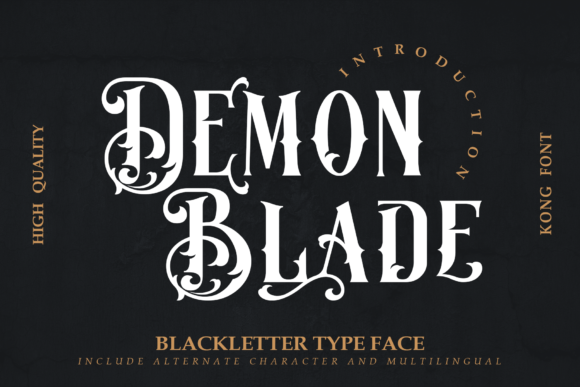
Visually, Demon Blade is rooted in the blackletter tradition, which is known for its dense, angular, and ornate letterforms. However, this display font softens those sharp edges just enough. The strokes feel a bit more fluid, and the overall structure has a slightly less rigid, more organic quality than its historical counterparts. It doesn’t try to replicate a medieval manuscript with perfect accuracy. Instead, it captures the spirit and visual texture of blackletter while making it usable for a wide range of creative projects. The result is a typeface that feels both familiar and fresh—a rare combination in the world of vintage fonts.
Where Demon Blade Truly Shines
The strength of Demon Blade lies in its versatility as a display font. It’s not designed for long paragraphs of body text, but for headlines, logos, and other prominent text elements where personality needs to make an immediate impact. Its compatibility with popular tools like Adobe Photoshop and Silhouette Design Studio makes it highly accessible for both digital designers and hands-on crafters. You can integrate it directly into your workflow without any technical headaches.
For brand identity projects, Demon Blade can be a powerful choice. It works exceptionally well for brands that want to project an image of edginess, craftsmanship, or vintage authenticity with a contemporary edge. Think of a craft brewery, a tattoo-inspired apparel line, a specialty coffee roaster, or an independent record label. When used in a logo, it provides immediate character and memorability, helping a brand stand out in a crowded market.
Its applications extend far beyond logos. In packaging design, a single word set in Demon Blade can draw the eye and communicate a product’s artisanal or rebellious nature. For editorial design, it can serve as a striking drop cap or a chapter title in a book, especially in genres like fantasy, horror, or historical fiction. On social media, it can make graphics pop, stopping the scroll with its unique texture. Crafters also find it ideal for physical projects—think custom apparel, signage, and home décor where its bold character translates beautifully to vinyl cuts and embroidery.
Pairing and Practical Application
Using a strong display font like Demon Blade effectively requires thoughtful pairing. Because it has such a strong personality, it needs a partner that complements rather than competes. A clean, simple sans serif font is often the safest and most effective choice. The stark contrast in style creates a clear visual hierarchy, allowing Demon Blade to command attention for the headline while the sans serif ensures readability for supporting text. A simple serif font can also work well, especially if you’re aiming for a more classic, literary feel.
Avoid pairing it with other highly decorative fonts like a complex script font or another ornate blackletter font. The goal is balance. You want the viewer’s eye to be guided, not confused. Before committing to a project, test the font at the actual size it will be used. While it’s excellent for large-scale applications, its intricate details can become muddy or difficult to read at very small sizes, especially in print. Always prioritize readability.
When evaluating Demon Blade for a commercial project, take a moment to review the licensing. It is a commercial font, so understanding the terms for your specific use—whether for a client’s logo, a product you sell, or a digital download—is a crucial step. This ensures your project is both legally sound and professionally executed. By treating fonts as key design assets, you protect your work and the work of the creators behind these tools.
A Tool for Creative Expression
Ultimately, Demon Blade is more than just a typeface; it’s a tool for expression. It offers designers, entrepreneurs, and creators a way to inject a specific mood and texture into their work. In a landscape often dominated by minimalist sans serif and clean modern typography, it provides a valuable alternative. It allows for the creation of brand identities and designs that feel handmade, thoughtful, and full of character.
For the small business owner crafting their own marketing materials, or the blogger looking to elevate their graphics, it provides a professional edge without requiring a deep knowledge of typographic history. It’s a creative font that does a lot of the heavy lifting for you. By understanding its strengths—its bold presence, its vintage charm, and its surprising adaptability—you can make an informed decision about whether it’s the right fit for your next project. In the right context, Demon Blade doesn’t just set a headline; it sets a mood, tells a story, and creates a lasting impression.